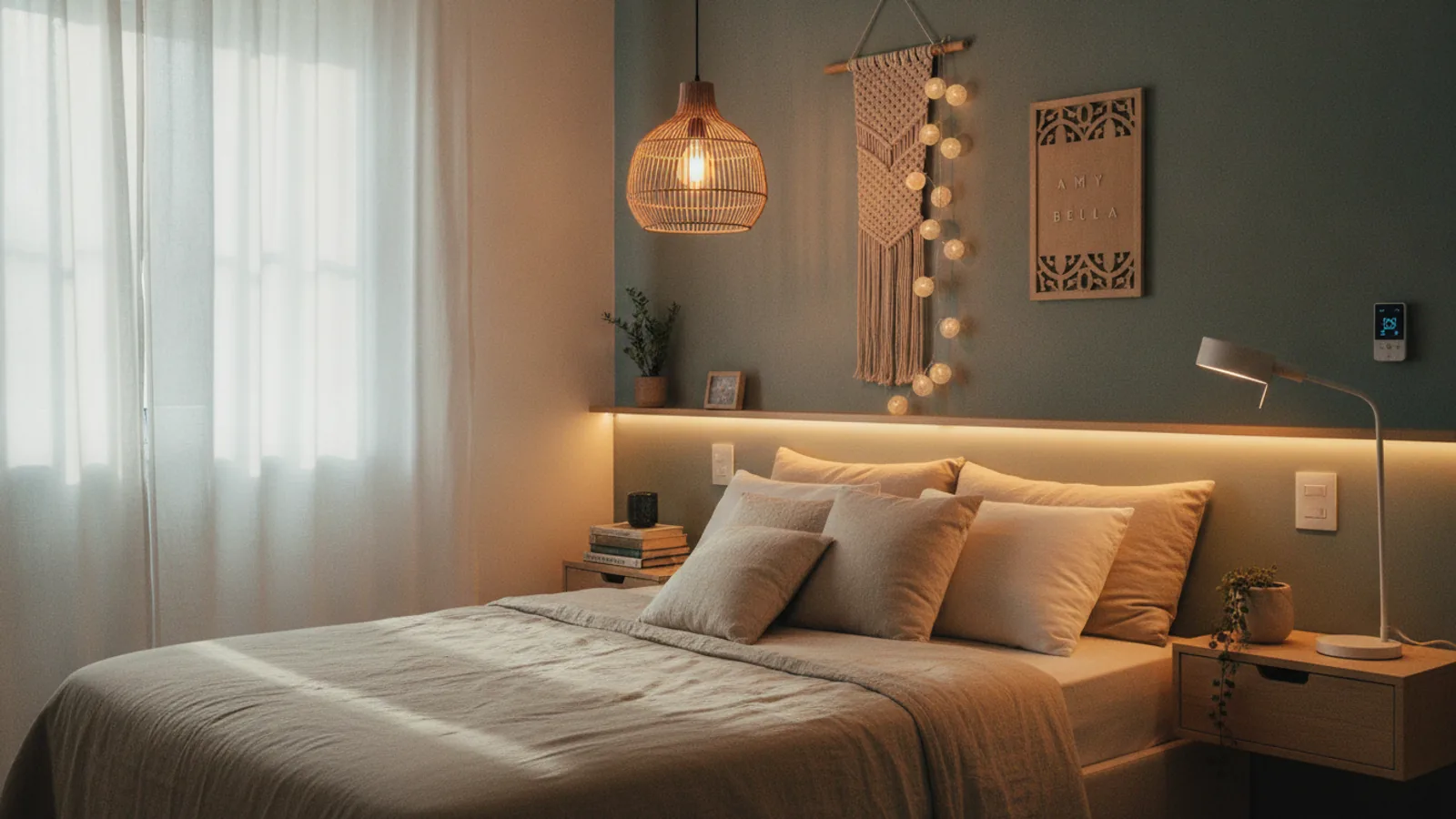
Small Bedroom Lighting Ideas
A practical step-by-step guide to small bedroom lighting ideas, including preparation, instructions, common issues, tips, and next steps.

Small Bedroom Lighting Ideas
A small bedroom can feel cramped and dim, but the right lighting strategy can transform it into a cozy, functional, and seemingly larger space. Over-relying on a single, harsh overhead light is a common mistake that creates shadows and an uninviting atmosphere. This guide provides practical, step-by-step instructions for layering different types of light to create a bright, comfortable, and versatile bedroom, no matter its size. We will cover everything from assessing your needs to choosing the right fixtures and bulbs to maximize your space.
Fast Answer
- Key Strategy: Layer your lighting
- Why It Works: Combining ambient (overall), task (focused), and accent (mood) lighting eliminates shadows, adds depth, and makes the room adaptable for different activities like reading, dressing, or relaxing.
Before You Start
Proper planning is the key to successfully lighting a small bedroom. Before you purchase any fixtures or bulbs, take a few moments to gather information and understand the space you're working with. This initial assessment will ensure your final choices are both beautiful and functional.
- Tape measure: To measure your room dimensions, ceiling height, and clearance for fixtures.
- Notepad and pen (or a notes app): To sketch your room layout, mark outlet locations, and list your lighting needs.
- An understanding of your room's "zones": Identify where you sleep, read, get dressed, or work. Each zone has different lighting requirements.
- A rough budget: Knowing your spending limit will help you prioritize which fixtures to invest in.
Step-by-Step Instructions
Assess Your Space and Identify Key Zones
The first step is to understand the canvas you're working on. Take a moment to analyze your bedroom's layout and how you use it. Grab your tape measure and notepad.
First, measure the room's length, width, and ceiling height. This is crucial for choosing appropriately scaled fixtures. A low ceiling (8 feet or less) calls for flush-mount lights, while a slightly taller ceiling might accommodate a semi-flush-mount or a small pendant.
Next, sketch a simple floor plan. Mark the locations of the bed, dressers, closets, windows, and any seating. Most importantly, note the location of all existing electrical outlets. This will determine where you can easily place plug-in lamps. Finally, identify your activity zones. Where do you read? Where do you get dressed? Do you have a small desk? Each of these areas is a candidate for dedicated task lighting.
Understand the Three Layers of Lighting
Professional lighting design is built on a simple principle: layering. Using a combination of three distinct types of light creates a balanced and adaptable environment. Relying on just one type is what makes many rooms feel poorly lit.
- Ambient Light: This is the overall, general illumination for the room. It's the foundational layer that allows you to see and move around safely. In a bedroom, this is typically provided by a central ceiling fixture or a powerful floor lamp.
- Task Light: This is focused, direct light for specific activities. It prevents eye strain and provides clarity where you need it most. Examples include a bedside lamp for reading, a light over a vanity mirror, or a desk lamp.
- Accent Light: This is directional light used to add style and create visual interest. It can be used to highlight a piece of art, a plant, or architectural details. Accent lighting draws the eye and can make a room feel more dynamic and spacious. LED strips behind a headboard are a perfect example.
Your goal is to incorporate at least one source from each of these three categories to create a complete lighting scheme.
Choose Space-Saving Ambient Lighting
In a small bedroom, floor and surface space are precious. The best source of ambient light is often a ceiling fixture, as it illuminates the entire room without taking up any footprint. However, the choice of fixture is critical.
Avoid large, low-hanging chandeliers or bulky fixtures that can dominate the room and make the ceiling feel lower. Instead, opt for a flush-mount (sits directly against the ceiling) or a semi-flush-mount (hangs down a few inches). These provide excellent, diffused light without overwhelming the space. Look for designs with simple, clean lines and a light-colored or glass shade to maximize light output.
Utilize Vertical Space with Wall Sconces
Wall-mounted lights, or sconces, are a small bedroom's best friend. They provide excellent task or accent lighting without cluttering your bedside table or floor. This instantly makes the room feel cleaner and more open.
Consider installing a pair of sconces on either side of the bed. This creates a balanced, hotel-like look and provides perfect reading light. There are two main types:
- Hardwired Sconces: These are wired directly into the wall for a seamless look. They require an electrician to install.
- Plug-in Sconces: These mount to the wall but have a cord that runs down to a nearby outlet. They are an excellent DIY-friendly option that offers the same space-saving benefits. Many models come with cord covers that can be painted to match your wall.
For maximum flexibility, look for swing-arm sconces that you can adjust and direct exactly where you need the light.
Select Slim and Functional Task Lighting
Beyond the bedside, you may need other task lighting. If you have a small desk or vanity area, a dedicated lamp is essential. The key is to think "slim" and "small footprint."
For a desk, choose a lamp with a thin base and an adjustable head. For a dresser or vanity, consider flanking the mirror with two thin buffet-style lamps or a single lamp with a small base. If you absolutely lack surface space, a thin floor lamp positioned right beside the furniture can serve the same purpose. Look for pharmacy-style floor lamps or other designs where the head can be angled downward for focused light.
Add Depth with Accent and Mood Lighting
This is where you can add personality and make the room feel larger. Accent lighting creates pools of light and shadow, which adds depth and prevents the room from feeling like a flat, boring box.
One of the most popular and effective small bedroom lighting ideas is using LED strip lights. They are inexpensive, easy to install, and incredibly versatile. Place a strip behind your headboard for a soft, backlit glow, or run one along the underside of your bed frame to create a cool, "floating" effect. You can also use a small, discreet uplight or canister light on the floor to illuminate a tall plant in a corner, drawing the eye upward and making the ceiling seem higher.
Choose the Right Light Bulbs
The fixture is only half the story; the bulb you put inside it determines the quality of the light. There are two key factors to consider: color temperature and brightness.
Color Temperature, measured in Kelvins (K), describes how "warm" or "cool" the light appears. For a bedroom, you want a cozy and relaxing atmosphere. Look for bulbs labeled "warm white" or "soft white," which fall in the 2700K to 3000K range. Avoid "cool white" or "daylight" bulbs (4000K and above), as they can feel sterile and harsh in a sleeping space.
Brightness is measured in lumens. A general rule of thumb for a bedroom is to have 10-20 lumens per square foot. For a 10x12 foot room (120 sq ft), you would aim for a total of 1,200-2,400 lumens distributed across all your light sources. Your main ceiling fixture might provide 800 lumens, while two bedside lamps could provide 450 lumens each. Always choose LED bulbs. They are incredibly energy-efficient, last for years, and come in a vast range of temperatures and brightness levels.
Amplify Light with Mirrors
While not a light source itself, a strategically placed mirror is one of the most powerful tools for brightening a small room. Mirrors reflect both natural and artificial light, effectively doubling the impact of your fixtures and making the entire space feel more open and airy.
The best placement is often directly opposite a window to capture and bounce daylight around the room. You can also place a mirror behind a lamp on a dresser or console table to amplify its glow in the evening. A large, full-length floor mirror leaning against a wall is a fantastic option as it reflects a large portion of the room and creates a strong sense of depth.
Quick Reference
| Situation | Use this | Why |
|---|---|---|
| The room feels dark and flat overall. | A bright, dimmable flush-mount ceiling light. | Provides even, foundational ambient light for the whole space. |
| I need to read in bed. | A swing-arm wall sconce or a slim bedside lamp. | Directs focused task light right onto your book without disturbing a partner. |
| My bedside tables are too cluttered. | Plug-in wall sconces or low-hanging pendants. | Frees up 100% of your nightstand surface area. |
| The room lacks personality or mood. | LED strip lights behind the headboard or a small uplight for a plant. | Creates soft, indirect accent light that adds depth and a cozy vibe. |
| My closet is a black hole. | Battery-powered, motion-activated LED puck lights. | Provides instant, automatic task lighting right where you need to see your clothes. |
Common Problems When You Plan Small Bedroom Lighting
-
Problem: The room has harsh shadows, especially in the corners.
Fix: This is a classic symptom of relying on a single overhead light. The solution is to layer. Add light sources at different heights, such as a floor lamp in one corner and a table lamp on a dresser. This spreads the light more evenly and fills in the dark spots.
-
Problem: The light feels cold, stark, or like an office.
Fix: Check the color temperature on your light bulbs. You are likely using "daylight" or "cool white" bulbs (4000K+). Replace them with bulbs in the 2700K-3000K (warm white) range to create a more relaxing and inviting glow.
-
Problem: There aren't enough outlets for all the lamps I want.
Fix: Use a high-quality, surge-protected power strip with a long cord and discreetly tuck it behind furniture like the bed or a dresser. This allows you to safely power multiple lamps from a single outlet. For a cleaner look, you can use cord covers to hide the wires along the baseboard.
Advanced Tips for Small Bedroom Lighting Ideas
- Embrace Smart Lighting: Replace your standard LED bulbs with smart bulbs. This allows you to control brightness, color temperature, and even the color of your lights from an app or voice assistant. You can create custom "scenes" like a "Wind Down" scene that slowly dims the lights over 30 minutes, or a "Wake Up" scene that gradually brightens them to mimic the sunrise.
- Consider the Lamp Shade: The material and color of your lamp shades have a big impact. Light-colored, fabric shades (like linen or cotton) will diffuse the light softly, contributing to ambient brightness. Dark, opaque, or metallic shades will create a more focused, dramatic pool of light, which is better for task or accent lighting.
- Use a Torchiere Floor Lamp: If you have decent ceiling height but limited floor space, a torchiere lamp is a great choice. This type of lamp directs its light upward, bouncing it off the ceiling to create soft, indirect ambient light that can make the entire room feel taller and more spacious.
Small Bedroom Lighting Ideas FAQ
What is the best type of lighting for a small bedroom?
There isn't one "best" type. The best strategy is a layered approach that combines three types of lighting. Start with a flush-mount ceiling light for general (ambient) light, add wall sconces or table lamps for reading (task), and use something like LED strips for mood (accent).
How can I make my small bedroom look brighter without adding more lamps?
First, paint your walls a light, reflective color. Second, use mirrors strategically. Placing a large mirror opposite a window will dramatically increase the amount of natural light in the room. Finally, make sure your existing lamp shades are light in color and that your bulbs are the appropriate brightness (lumens) for the space.
Should a small bedroom have a ceiling light?
Yes, absolutely. A central ceiling light provides crucial ambient illumination without taking up any floor or table space. A flush-mount or semi-flush-mount fixture is the ideal choice as it stays close to the ceiling and won't make the room feel smaller.
How many lumens do I need for a small bedroom?
A good target is 10 to 20 lumens per square foot. To calculate this, multiply your room's length by its width to get the square footage, then multiply that number by 10 and 20. For a 10x10 foot room (100 sq ft), you'd want a total of 1,000 to 2,000 lumens distributed among all your light fixtures.
Final Checklist for Small Bedroom Lighting
- You have identified the key activity zones in your bedroom (sleeping, reading, dressing).
- Your plan includes sources for all three layers of light: ambient, task, and accent.
- You have chosen space-saving fixtures like flush-mounts, wall sconces, or slim-profile lamps.
- You have selected LED bulbs with a warm white color temperature (2700K-3000K).
- You have considered adding a dimmer switch to your main light for greater control.
- You have a plan to use a mirror to amplify natural and artificial light.
- You have made a note to hire a licensed electrician for any hardwiring installations.