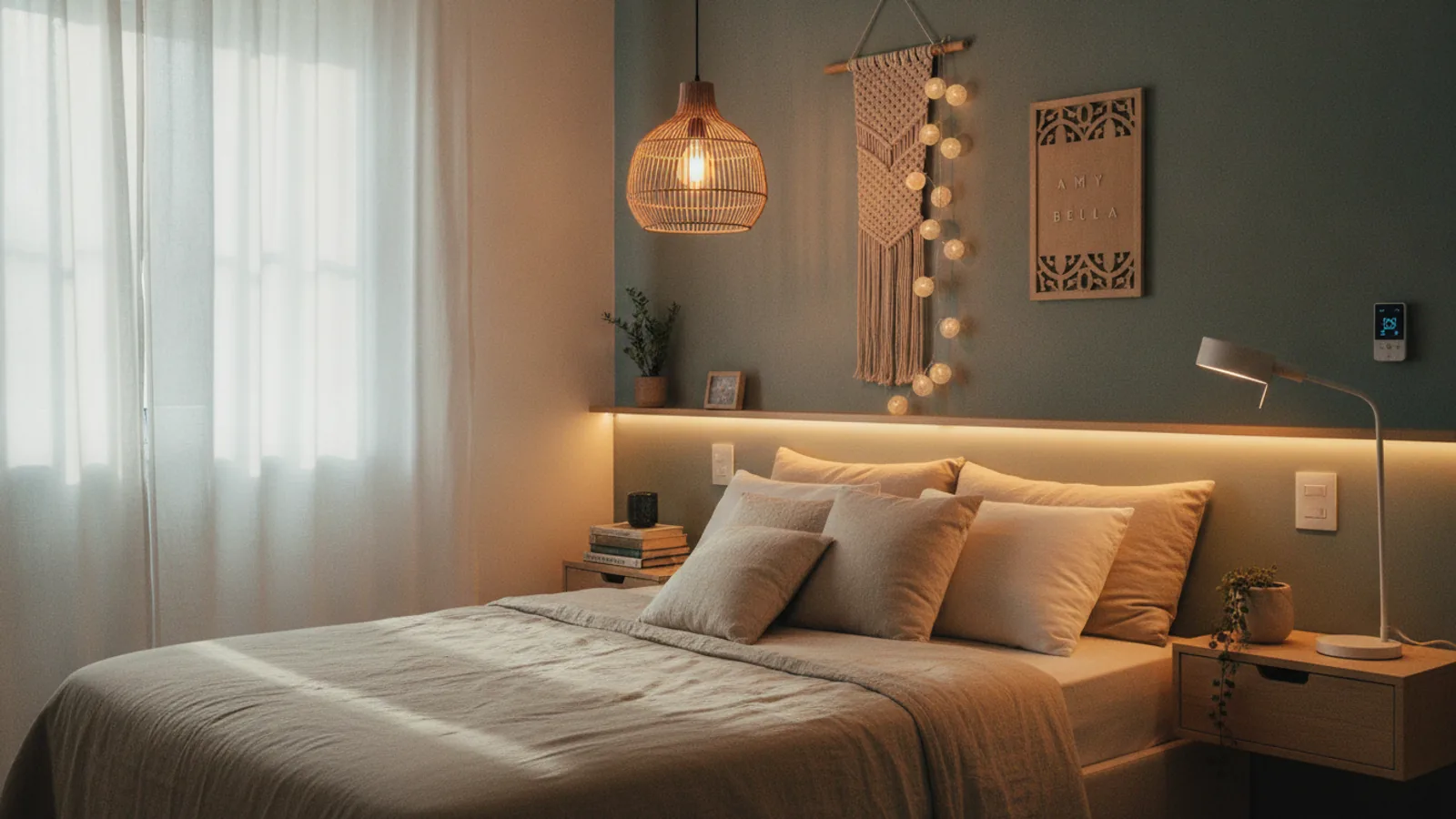
Small Bedroom Weekend Refresh Ideas
A practical step-by-step guide to small bedroom weekend refresh ideas, including preparation, instructions, common issues, tips, and next steps.

Small Bedroom Weekend Refresh Ideas
Feeling cramped or uninspired by your small bedroom? You don't need a full-scale renovation to make a big impact. This guide provides clear, practical ideas to completely refresh your small bedroom in just one weekend. We'll walk you through high-impact, low-cost strategies, from decluttering and rearranging to smart updates in lighting and decor. Follow these steps to transform your small space into a serene, functional, and stylish retreat without breaking the bank or your back.
Fast Answer
- Top Priority: Declutter and deep clean to create a blank slate.
- Biggest Impact: Rearrange furniture to optimize flow and perceived space.
- Easiest Upgrade: Swap out textiles like bedding and curtains for new color and texture.
- Best Trick: Use mirrors and layered lighting to make the room feel larger and brighter.
- Smartest Move: Incorporate vertical storage to draw the eye up and free up floor space.
Before You Start
- A Clear Plan: A simple sketch of your desired layout and a list of tasks.
- Decluttering Supplies: Trash bags, and boxes labeled "Donate," "Keep," and "Relocate."
- Cleaning Essentials: All-purpose cleaner, microfiber cloths, vacuum, duster.
- Basic Toolkit: Measuring tape, level, screwdriver, hammer.
- Furniture Sliders: To easily and safely move heavy items without scratching floors.
- Potential New Items: Budget for any new textiles (bedding, rug, curtains), storage bins, or decor you plan to add.
Step-by-Step Instructions
Plan Your Weekend Project
A successful refresh starts with a plan, not with moving furniture. Spend an hour on Friday evening defining your goals. What is the biggest problem with your room right now? Is it clutter, poor lighting, or an awkward layout? Decide on a simple color palette—sticking to two or three coordinating colors can make a small space feel more cohesive and calm.
Sketch a rough floor plan on a piece of paper. Measure your furniture and draw scaled-down shapes to see how they might fit in different arrangements. Finally, set a realistic budget. A refresh can cost almost nothing if you focus on decluttering and rearranging, or it can involve a few hundred dollars for new bedding, lighting, and decor. Knowing your limit prevents overspending on impulse buys.
Execute a Ruthless Declutter
This is the most crucial and transformative step. Be prepared to be decisive. The goal is to touch every single item in your room and decide its fate. Use the four-box method: set up containers for Trash, Donate, Relocate (items that belong in another room), and Keep.
Start with one area, like your nightstand or closet, and work your way around the room. Pull everything out. If you haven't used an item in a year, or if it doesn't bring you joy or serve a clear function, it's time for it to go. Be especially critical of clothes, old papers, and miscellaneous knick-knacks that accumulate on surfaces. Once the clutter is gone, give the room a thorough deep clean. Wipe down walls and baseboards, clean windows, and vacuum or mop the floors.
Optimize the Furniture Layout
With a clean, empty space, you can now rethink your layout. This is one of the most effective small bedroom weekend refresh ideas because it's free and can completely change the feel of the room. The largest piece of furniture, your bed, should be placed first. A common strategy is to place it against the wall opposite the door to create a welcoming focal point. However, pushing it into a corner can sometimes open up more usable floor space.
Your goal is to create a clear, unobstructed path from the doorway to the far side of the room. This improves flow and makes the space feel larger. Use furniture sliders under the legs of heavy items like your bed and dresser to move them easily and avoid scratching your floors. Refer back to your sketched plan, but don't be afraid to try a layout that looks good in reality, even if it wasn't your first choice on paper.
Refresh Your Textiles
Textiles are the soft layers of a room that add color, texture, and personality. Swapping them out is a fast, high-impact update. Start with your bedding. A new duvet cover or quilt in a light color or a simple, small-scale pattern can instantly brighten the room.
Next, consider your windows. Heavy, dark curtains can make a small room feel like a cave. Replace them with lighter-colored or sheer curtains that allow natural light to filter in. Hang the curtain rod several inches above the window frame and extend it wider than the frame on both sides. This visual trick makes the window—and the room—appear taller and wider. If your floor is bare, adding a small area rug can define the sleeping area and add a cozy texture underfoot.
Improve and Layer Your Lighting
A single, harsh overhead light casts shadows and can make a small room feel flat and uninviting. The solution is layered lighting. You want at least three points of light in your room: ambient (overall light), task (for reading), and accent (to highlight decor).
Your overhead fixture provides ambient light. For task lighting, place a lamp on your nightstand or mount a sconce on the wall beside your bed. This frees up surface space, a huge plus in a small room. Finally, add a floor lamp in a corner to provide a warm glow and eliminate dark spots. When choosing lightbulbs, look for a "warm white" color temperature (around 2700K) to create a relaxing, cozy atmosphere.
Implement Smart Storage Solutions
In a small bedroom, every inch counts. The key to maintaining a clutter-free space is having a designated home for everything. Think vertically. Tall, narrow bookshelves or a set of floating shelves can hold books, decor, and small items without taking up valuable floor space. This also draws the eye upward, making the ceiling feel higher.
Utilize hidden storage areas. The space under your bed is prime real estate. Use shallow, rolling bins to store out-of-season clothing, extra linens, or shoes. If you have a closet, maximize its potential with organizers, shelf dividers, and slim hangers. For items that must remain out, use attractive baskets and boxes to contain them neatly on shelves or on top of a dresser.
Create a Visual Focal Point
A focal point gives the eye a place to rest when entering the room, which can make the space feel more organized and intentional. In most bedrooms, the wall behind the headboard is the natural focal point.
You have several options here. Hanging one large piece of art is a simple and effective choice. A more advanced option is to create an accent wall by painting it a slightly darker shade than the other walls or applying a peel-and-stick wallpaper. A classic and highly recommended strategy for small rooms is to hang a large mirror. It will not only serve as a beautiful focal point but will also reflect light and create a powerful illusion of depth, making your room feel significantly larger.
Add Personality and Life
The final step is to add the personal touches that make the room feel like yours. This is not an invitation to re-clutter the space. Be selective. Choose a few of your favorite photos to frame, display a small collection of meaningful objects, or set out a couple of books you love on your nightstand.
Finally, add some life with plants. Greenery can purify the air and add a natural, calming element to your room. If you're short on surface space, consider a hanging planter or a small plant on a floating shelf. Choose low-maintenance options like a snake plant, pothos, or ZZ plant that can thrive in lower light conditions.
Quick Reference
| Situation | Use This | Why |
|---|---|---|
| Room feels dark and cramped | A large mirror and layered lighting | The mirror reflects light and creates an illusion of depth, while multiple light sources eliminate shadows. |
| No space for two nightstands | Wall-mounted floating shelves or sconces | Frees up precious floor space while providing surfaces and light for each side of the bed. |
| Clutter keeps coming back | Vertical storage and under-bed bins | It utilizes unused wall and floor space, giving every item a designated, out-of-sight home. |
| The room feels boring or flat | New textiles and a single accent wall | These add color, pattern, and texture, creating a point of visual interest without adding bulky furniture. |
Common Problems When You Refresh a Small Bedroom
The new furniture layout just doesn't work.
Sometimes a layout that seems perfect on paper feels awkward in reality. The most common culprit is a blocked pathway. Your primary goal should be an easy-to-navigate route from the door to your bed and closet. If the new arrangement fails this test, don't be afraid to move things back. Try another configuration from your plan, or simply revert to the original layout and focus on other refresh ideas like textiles and lighting.
The room still feels cluttered after I decluttered.
This usually happens for one of two reasons. First, you may have too many small, "homeless" items left out on surfaces. The solution is better containment: use decorative boxes or baskets to group these items. Second, you might have too many visual elements competing for attention. Try simplifying your decor. Store away some of the decorative objects and see if the room feels calmer. You can always rotate them back in later.
My new decor items make the room feel smaller.
This is a common pitfall. When implementing small bedroom weekend refresh ideas, it's easy to get excited and buy new things that inadvertently add bulk. The scale of your decor matters. Avoid large, busy patterns on bedding or rugs. Opt for artwork that is appropriately sized for the wall. Choose lamps with slim profiles. If a new item is overwhelming the space, it may not be the right fit, even if you love it.
Advanced Tips for Small Bedroom Weekend Refresh Ideas
Use a Monochromatic Color Scheme
For a truly expansive feel, try painting your walls, trim, and even the ceiling in the same light color (or very similar shades). This technique, known as color drenching, blurs the lines where walls end and the ceiling begins, making the entire room feel bigger and more cohesive. Soft whites, pale grays, or light beige tones work exceptionally well.
Choose Furniture with Exposed Legs
Furniture that sits directly on the floor, like a solid-base bed frame or a blocky dresser, can feel heavy and visually shrink a room. Instead, choose pieces with visible "leggy" designs. A bed frame, nightstand, or bench with exposed legs allows you to see the floor underneath, which creates an airy, open feeling and the illusion of more space.
Create Functional "Zones"
Even a tiny bedroom can serve multiple functions if you define zones. Use a small rug to anchor your sleeping area. Place a slim console table or floating desk against one wall to create a dedicated work or vanity space. Position a comfortable chair and a floor lamp in a corner to establish a cozy reading nook. Visually separating the room's functions makes it feel more organized and purposeful.
Small Bedroom Weekend Refresh Ideas FAQ
How can I make my small bedroom look bigger without painting?
Focus on three key areas: light, reflection, and clutter. Maximize natural light by swapping heavy drapes for light, sheer curtains. Add a large mirror opposite the window to bounce light around the room. Finally, a thorough decluttering is the most effective way to instantly create more visual space without spending a dime.
What is the best color for a small bedroom?
Light, neutral colors are a classic choice for a reason—they reflect light and make a space feel open and airy. Soft whites, light grays, and pale blues are excellent options. However, don't be afraid of dark colors. A deep navy or charcoal can create a cozy, jewel-box effect that feels intentional and sophisticated, especially when paired with good lighting and metallic accents.
Should all my furniture match in a small bedroom?
No, it's often better if it doesn't. A matching bedroom set can feel bulky and dated. Mixing pieces creates a more collected, personal, and modern look. The key to success is to ensure the pieces have a common element that ties them together, such as a similar wood tone, color, or hardware finish (e.g., all brass or all black metal).
Final Checklist for Small Bedroom Weekend Refresh Ideas
- Create a clear plan, sketch, and budget for your refresh.
- Perform a thorough declutter, removing anything that doesn't belong.
- Deep clean all surfaces, including walls, windows, and floors.
- Experiment with a new furniture layout to maximize space and flow.
- Swap out old bedding, curtains, or rugs for fresh textiles.
- Improve the lighting by adding at least two new light sources (e.g., lamps).
- Implement smart storage, focusing on vertical and under-bed options.
- Establish a clear focal point with a mirror, art, or accent wall.
- Add curated personal touches and a touch of greenery.
- Step back and enjoy your newly refreshed, functional, and beautiful space.