Small Living Room Lighting Ideas
A practical step-by-step guide to small living room lighting ideas, including preparation, instructions, common issues, tips, and next steps.

Small Living Room Lighting Ideas
Good lighting is one of the most powerful tools for transforming a small living room. The right strategy can make a cramped space feel open, airy, and inviting, while the wrong one can make it feel even smaller. This guide provides a clear, step-by-step process for planning and implementing a layered lighting scheme that maximizes both function and style. We'll walk you through how to assess your space, choose the right types of light, and place them effectively to create a living room you love spending time in.
Fast Answer
- Core Strategy: Layer three types of light: ambient (overall), task (focused), and accent (decorative).
- Key Goal: Make the room feel larger, brighter, and more functional for different activities.
- Avoid This: Relying on a single, harsh overhead light, which creates shadows and makes a room feel small.
Before You Start
Proper planning is the key to successful small living room lighting. Before you buy any fixtures or bulbs, you need to understand your space and your needs. Gather these simple items to create a solid plan.
- Measuring tape: To measure your room dimensions and furniture placement.
- Pencil and paper (or a tablet): To sketch a simple floor plan of your living room.
- Your current living room layout: Note where furniture, windows, doors, and, most importantly, electrical outlets are located.
- A list of activities: Write down everything you do in the room, such as reading, watching TV, entertaining guests, or working.
Step-by-Step Instructions
Assess Your Room and Existing Light
The first step is to take stock of what you already have. Look at your living room during the day and at night. How does the natural light from windows affect the space? Where are the dark corners? Is your current lighting harsh or dim?
On your piece of paper, draw a simple map of your living room. It doesn't need to be perfect. Mark the locations of windows, doors, large furniture pieces like your sofa and TV console, and all available electrical outlets. This visual guide will be your blueprint for placing new lights.
Define Your Room's Activity Zones
Even a small living room has different zones for different activities. Identifying them helps you place light exactly where it's needed. Look at your floor plan and circle these areas. Common zones include:
- Conversation Area: Usually centered around the sofa and coffee table.
- Reading Nook: A comfy chair, perhaps with a small side table.
- Entertainment Zone: The area around your television or sound system.
- Traffic Paths: The main walkways through the room.
Each zone has unique lighting needs. A reading nook requires bright, direct light, while an entertainment zone needs soft, indirect light that won't cause glare on the screen.
Plan Your Ambient Lighting Layer
Ambient light is the overall illumination that fills the room and allows you to see and move around safely. In small living rooms, the goal is soft, even light that doesn't create harsh shadows. A single, powerful ceiling fixture (often called a "boob light") is a common mistake because it casts light straight down, making the ceiling feel lower and corners dark.
Instead, consider these options for better ambient light:
- Flush-mount or Semi-flush-mount Fixtures: These sit close to the ceiling and are great for rooms with low ceilings. Look for designs with frosted glass or a fabric shade to diffuse the light gently.
- Track Lighting: Modern track lighting allows you to aim multiple lights in different directions from a single power source, illuminating the whole room.
- Multiple Lamps: If you can't change a ceiling fixture, use a combination of floor and table lamps to create ambient light. Place a tall floor lamp in a corner to bounce light off the walls and ceiling.
Add Focused Task Lighting
Task lighting is brighter, directed light for specific activities. This is where you address the needs of the zones you identified earlier. Placing task lights correctly prevents eye strain and makes your living room much more functional.
For your reading nook, a floor lamp with an adjustable head or a swing-arm wall sconce works perfectly. For a desk or craft area, a dedicated desk lamp is essential. If you have a bar cart, a small, stylish table lamp can make it a functional and attractive feature.
Wall-mounted sconces are a fantastic choice for small rooms because they provide excellent light without taking up any floor or table space. Plug-in models are widely available, so you don't need to hire an electrician to install them.
Incorporate Accent Lighting for Depth
Accent lighting is the secret weapon for making a small room feel larger and more interesting. This layer adds visual depth by creating points of interest and drawing the eye around the room. It highlights things you want to show off, like artwork, plants, or architectural details.
Here are some simple ways to add accent lighting:
- Picture Lights: A small, dedicated light mounted above a piece of art makes it pop and adds a touch of sophistication.
- Uplights: Place a small canister light on the floor behind a large plant or in a corner to cast dramatic shadows on the ceiling.
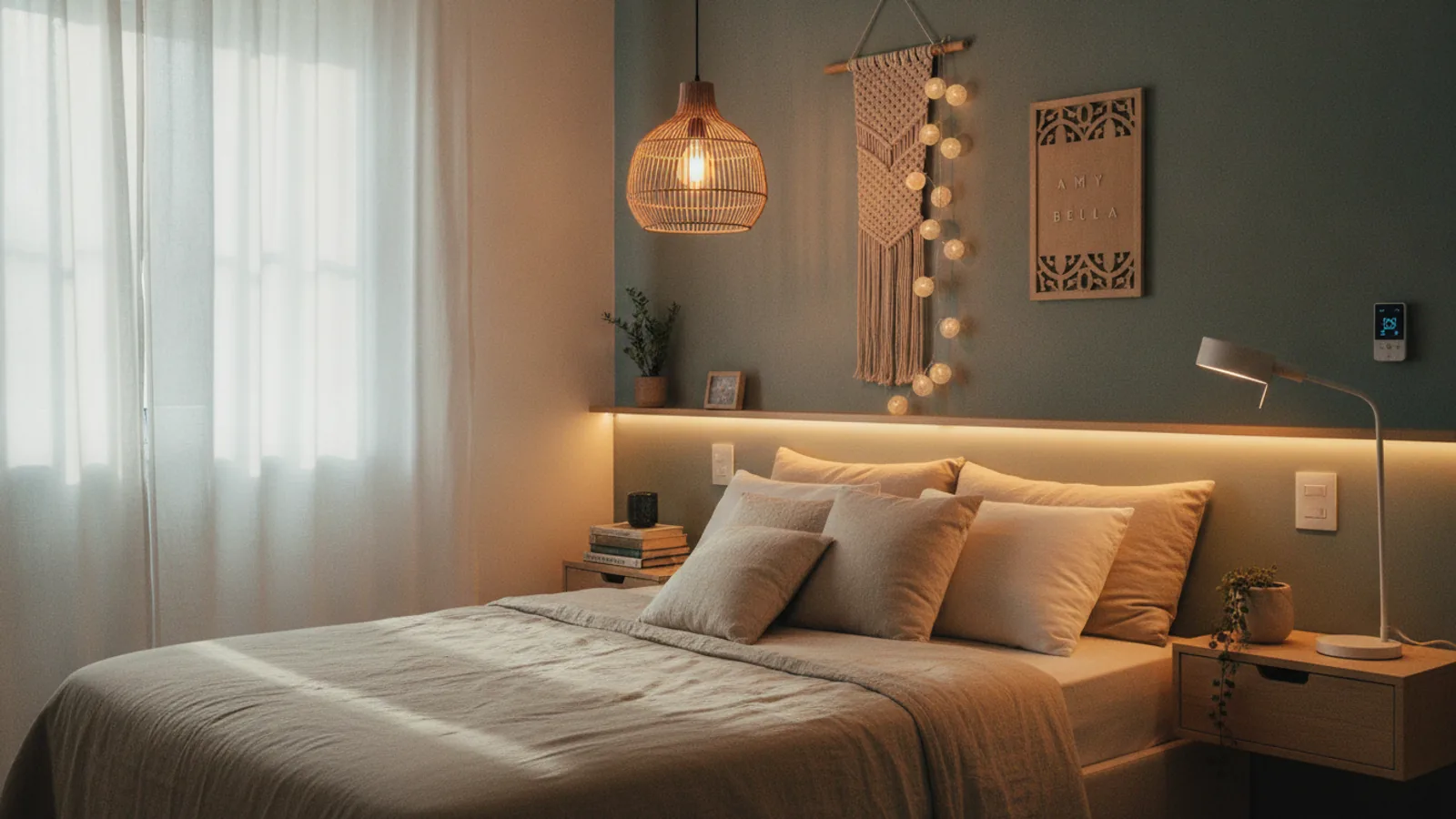
- LED Light Strips: These are inexpensive and versatile. Stick them behind your TV for a soft backlight that reduces eye strain, or place them under floating shelves to create a beautiful glow.
By drawing attention to the vertical surfaces (walls) of your room, accent lighting makes the space feel wider and less boxed-in.
Choose the Right Bulbs
The light bulbs you choose are just as important as the fixtures. Two key factors to consider are color temperature and brightness.
Color Temperature is measured in Kelvins (K) and describes how "warm" or "cool" the light appears. For a cozy, inviting living room, choose bulbs in the 2700K to 3000K range. This is often labeled as "Soft White" or "Warm White." Higher numbers (4000K+) produce a cooler, blue-tinged light that can feel sterile, like an office or hospital.
Brightness is measured in lumens, not watts. Watts measure energy use, while lumens measure light output. A standard 60-watt incandescent bulb produces about 800 lumens. When choosing LED bulbs, look for the lumen count to match the brightness you need. For a small living room, a total of 1,500 to 3,000 lumens distributed across all your light sources is a good target.
Install Dimmers Everywhere Possible
If you make only one change to your lighting, make it adding dimmers. Dimmers are the key to flexibility. They allow you to transform the mood of your room instantly, from bright and energetic for cleaning or working, to soft and relaxed for watching a movie or talking with friends.
You can install dimmer switches for hardwired fixtures (a job for an electrician if you're not experienced) or buy plug-in dimmer modules for your lamps. When buying bulbs, make sure they are labeled as "dimmable," as not all LED bulbs work with dimmers.
Use Mirrors and Reflective Surfaces to Amplify Light
Mirrors are a classic interior design trick for small spaces because they create an illusion of depth. They are also fantastic tools for enhancing your lighting scheme. Placing a large mirror on a wall opposite a window will bounce natural light around the room, making it feel significantly brighter during the day.
At night, placing a mirror behind a table lamp or across from a floor lamp will double the effect of that light source. Other reflective surfaces, like a glass coffee table, metallic decor items, or a glossy-finish media console, can also help scatter light and reduce dark spots.
Quick Reference
| Situation | Use This Type of Light | Why It Works |
|---|---|---|
| General room illumination | Dimmable flush-mount fixture or multiple floor lamps | Provides soft, even ambient light without creating harsh shadows. |
| Reading in a chair | Adjustable floor lamp or a wall sconce | Delivers focused task lighting directly on your book, preventing eye strain. |
| Watching TV | Low-level accent lighting (e.g., LED strips behind TV) | Reduces screen glare and eye fatigue by creating a soft glow around the screen. |
| Making the room feel taller | Torchiere (uplight) floor lamp in a corner | Draws the eye upward by bouncing light off the ceiling, creating an illusion of height. |
| Highlighting artwork or decor | Wall-mounted picture light or a small spotlight | Adds depth and a focal point, making the room feel more curated and less flat. |
Common Problems When Lighting a Small Living Room
The room feels sterile and cold, like an office.
The Cause: This is almost always caused by using light bulbs with a high color temperature (4000K or above), often labeled "Cool White" or "Daylight."
The Fix: Swap your bulbs for ones in the 2700K to 3000K range ("Soft White" or "Warm White"). This warmer glow is much more inviting and cozy. Also, ensure you have multiple light sources at different heights (table lamps, floor lamps) rather than just one overhead light.
There are dark, gloomy corners.
The Cause: A single central light fixture often can't reach the corners of a room, especially if furniture is blocking the path of the light.
The Fix: This is a perfect job for an uplight or a tall floor lamp. Place one in the dark corner to bounce light off the walls and ceiling, instantly brightening the area and making the entire room feel larger.
The light creates a terrible glare on the TV screen.
The Cause: A light source is positioned directly across from or above the screen, reflecting off the glass.
The Fix: Reposition your lamps so they are to the side of your seating area or TV console. The best solution is bias lighting: placing a soft, dim light source (like an LED strip) on the back of the television itself. This provides enough ambient light to reduce eye strain without causing any screen glare.
I don't have enough outlets for all the lamps I need.
The Cause: Older homes, in particular, may have very few outlets in a room.
The Fix: Use a high-quality, UL-certified power strip with surge protection to safely add more outlets. Tuck it behind a sofa or media console. For accent lighting, consider using rechargeable, battery-powered puck lights or wall sconces, which require no outlets at all.
Advanced Tips for Small Living Room Lighting
- Draw the Eye Upward: Use lighting to emphasize vertical space. Tall, slender floor lamps, or wall sconces that cast light both up and down, can make ceilings feel higher than they are. This "vertical lighting" trick counteracts the horizontal feeling of a small footprint.
- Think About "Invisible" Light Sources: Modern lighting solutions can be hidden. Install LED strip lighting along the top of bookshelves, under a media console, or along a baseboard to provide a soft, diffuse glow without a visible fixture. This creates ambiance and a high-end feel.
- Create Smart Lighting "Scenes": If you're comfortable with technology, smart bulbs are a game-changer. You can program different "scenes" for your living room through an app. For example, a "Movie Night" scene could dim the main lights to 20% and turn on only the TV backlights. A "Reading" scene could turn the overhead light off and turn your task lamp on to 100%.
- Maintain a Cohesive Style: In a small space, visual clutter can be overwhelming. Try to stick to a consistent finish for all your light fixtures, whether it's brushed brass, matte black, or chrome. This creates a more unified, intentional look that helps the space feel calm and organized.
Small Living Room Lighting Ideas FAQ
What is the single best type of ceiling light for a small living room?
A flush-mount or semi-flush-mount fixture with a diffuser is generally the best choice. It stays close to the ceiling, preserving headroom, and a glass or fabric diffuser softens the light to prevent harsh shadows, which is critical in a small space.
How can I add more light if I'm a renter and can't change fixtures?
Focus on "plug and play" solutions. Use a combination of floor lamps and table lamps to build your layers of light. Plug-in wall sconces are a fantastic option because they provide the look of a custom installation without any wiring. You can also use battery-powered lights for small accent areas.
Is it okay to use a large, statement light fixture in a small room?
Yes, but with caution. A large fixture can act as a stunning focal point. The key is to choose one that is visually "light." Look for designs with an open, airy frame (like a geometric metal pendant) or one made of clear glass or acrylic. A visually heavy, solid chandelier will overwhelm the space, but a visually light one can add drama and make the ceiling feel higher.
Final Checklist for Small Living Room Lighting
Run through this final checklist to ensure you've covered all the bases for a beautifully and effectively lit small living room.
- Assessed the Space: You have a floor plan marking windows, furniture, and outlets.
- Layered Your Lighting: Your plan includes sources for ambient, task, and accent lighting.
- Targeted Your Zones: You've placed specific task lights where you need them for activities like reading.
- Chose Warm Bulbs: You've selected dimmable bulbs in the 2700K-3000K color temperature range.
- Checked Lumen Levels: You have enough total brightness for the room without it being blinding.
- Incorporated Dimmers: You have a plan to add dimmers to key lights for maximum flexibility.
- Used Reflective Surfaces: You've considered adding a mirror or other reflective elements to amplify light.
- Eliminated Glare and Shadows: Your lamp placements are planned to avoid harsh shadows and reflections on screens.