Home Office Organisation Ideas
A practical step-by-step guide to home office organisation ideas, including preparation, instructions, common issues, tips, and next steps.
Home Office Organisation Ideas
This guide explains how to approach home office organisation ideas, including the preparation, practical steps, common mistakes, and final checks that help you finish with confidence.
Before You Start
Step-by-Step Instructions
Quick Reference
Common Problems When You Organise Your Home Office
Even with good intentions, you might run into a few common issues when trying to get your home office organised. Knowing these challenges beforehand can help you avoid them or find quick solutions.
Problem: Getting Overwhelmed by the Mess
Starting with a large, cluttered space can feel impossible. You might not know where to begin, or you might start and then quickly feel defeated by the amount of stuff.
Solution: Don't try to do it all at once. Break the task down into smaller, manageable steps. Instead of "Organise the whole office," try "Clear the desk," then "Organise one drawer," and so on. Set a timer for 15-30 minutes and focus intently during that time. When the timer goes off, take a break. Small wins build momentum.
Problem: Buying Too Much Storage Too Soon
It's tempting to rush out and buy fancy organisers, bins, and shelves before you've even started sorting. However, this often leads to buying storage that doesn't fit your actual needs or space, creating more clutter.
Solution: Always declutter and sort your items first. Once you know exactly what you're keeping and how much of it there is, you can make informed decisions about what kind of storage you truly need. Measure your space before purchasing anything to ensure it fits perfectly.
Problem: Cables and Cords Are Still a Mess
Even after tidying up, tangled cables can quickly make an office look messy and make it hard to clean. They can also be a tripping hazard or make it difficult to move devices.
Solution: Invest in simple cable management tools. Cable ties, velcro straps, cable sleeves, or a cable management box can effectively bundle and hide wires. Mount power strips under your desk or use adhesive clips to guide cables along the edge of your desk or wall. This makes a huge difference in the overall neatness of your workspace.
Problem: Not Maintaining the Organisation
You've put in all the hard work, but within a few weeks, the clutter starts to creep back in. This is a common issue, as daily habits can easily undo your efforts.
Solution: Establish a daily and weekly routine. Spend 5-10 minutes at the end of each workday tidying your desk, putting away anything out of place, and preparing for the next day. Once a week, dedicate a slightly longer period (e.g., 30 minutes) to a deeper tidy-up, filing new papers, and reviewing your digital desktop. Consistency is key to keeping your home office organised long-term.
Advanced Tips for Home Office Organisation Ideas
Once you have a solid foundation of organisation, you can explore more advanced strategies to fine-tune your home office for maximum efficiency and comfort. These tips go beyond the basics to help you create an even more streamlined and enjoyable workspace.
Embrace a "Paperless" Workflow
While some physical documents are necessary, significantly reducing your paper footprint can transform your office. Scan important documents and save them digitally in a well-organised folder structure with consistent naming conventions. Use cloud storage services for secure access and backup. For bills and statements, opt for digital versions whenever possible. This reduces the need for filing cabinets and frees up physical space.
Optimise for Ergonomics
Beyond simply adjusting your monitor, consider a full ergonomic assessment of your workspace. This might involve an adjustable standing desk, an ergonomic chair tailored to your body, or a specialized keyboard and mouse. Proper ergonomics can prevent strain, reduce fatigue, and significantly improve your comfort and focus over long work periods. Even small adjustments, like a footrest or wrist support, can make a big difference.
Implement Visual Organisation Principles
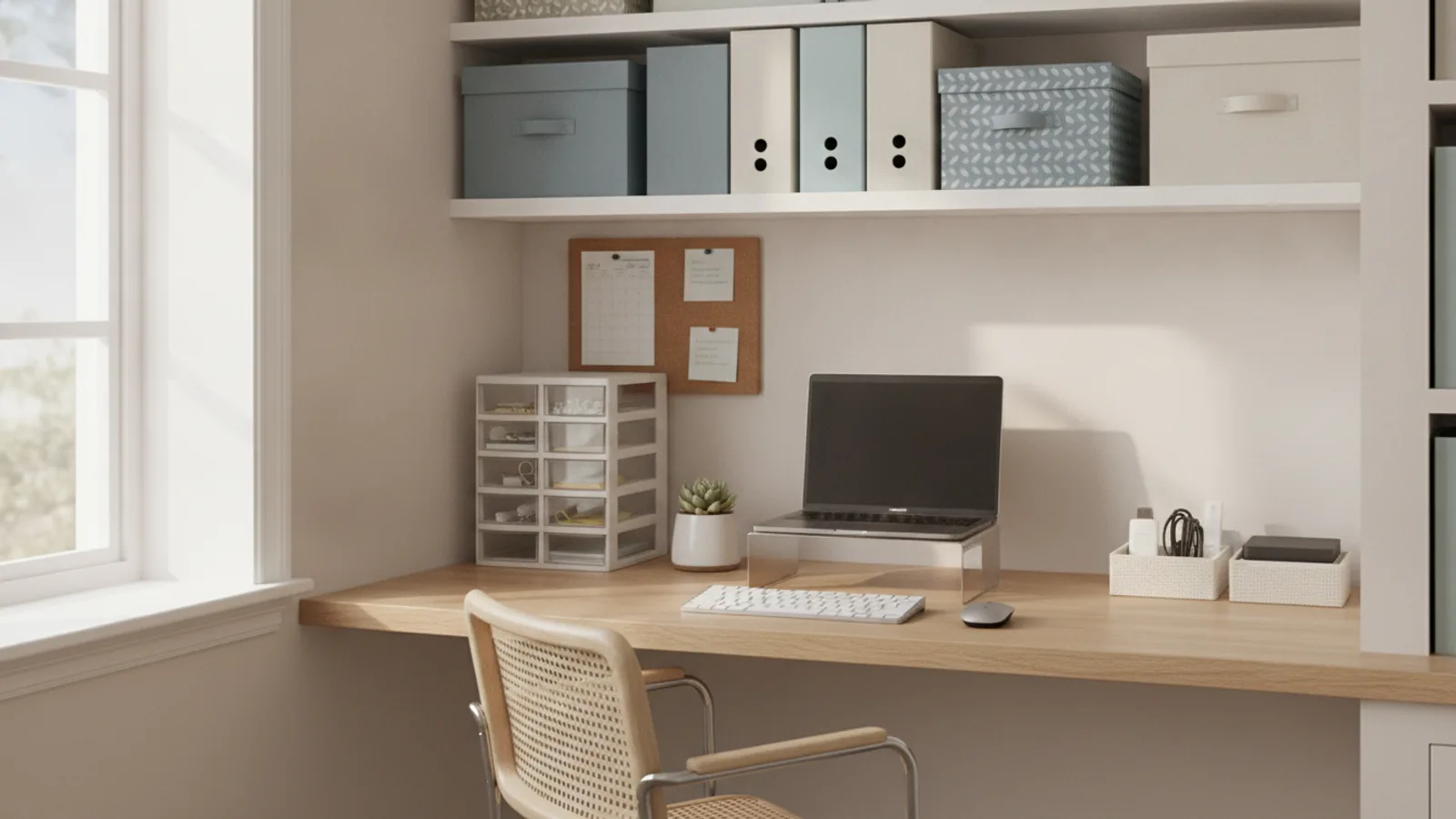
Use visual cues to help maintain order and productivity. This can include color-coding your files, folders, or storage bins to quickly identify categories. Use clear containers so you can see contents at a glance. Whiteboards or bulletin boards can be used for visual planning, task tracking, or displaying inspiring images, keeping essential information visible without cluttering your main desk.
Integrate Smart Home Technology
For a truly modern and efficient office, consider integrating smart home devices. Smart lighting can adjust brightness and color temperature to suit the time of day or your task, reducing eye strain. Smart plugs can automate your coffee maker or turn off non-essential electronics at the end of the day. Voice assistants can help you manage your calendar, set reminders, or play focus music without breaking your workflow.
Design for Focus and Inspiration
Your office should not just be organised, but also inspiring. Consider elements of biophilic design, like incorporating plants or natural light, which are known to improve mood and concentration. Minimise distractions by strategically placing your desk away from high-traffic areas if possible, or using sound-dampening panels in an open-plan living space. A calming color palette can also contribute to a serene work environment.
Home Office Organisation Ideas FAQ
How often should I declutter my home office?
A major decluttering should happen at least once a year, similar to spring cleaning. However, quick daily tidies (5-10 minutes) and a more thorough weekly check-in (30 minutes) are crucial to prevent clutter from accumulating again. This consistent effort will make annual decluttering much easier.
What are the best organisation ideas for a small home office?
For small spaces, focus on vertical storage (wall shelves, tall narrow bookcases, pegboards), multi-functional furniture (a desk with built-in drawers, an ottoman with storage), and items that can be tucked away (folding desks, portable file carts). Keep only the absolute essentials on your desk and use clear containers to make small items visible.
How can I organise my office on a tight budget?
You don't need expensive items. Start by reusing what you have: old shoe boxes can become drawer dividers, and glass jars can hold pens. Look for affordable solutions at dollar stores, discount retailers, or second-hand shops. DIY projects like painting old containers or building simple shelves from inexpensive materials can also be very effective. The key is decluttering first, so you only buy what's truly needed.
What should I do with important documents I rarely use but can't throw away?
For documents like birth certificates, passports, or property deeds, use a fireproof safe or a secure, dedicated storage box. For less critical but still important papers (like old tax returns or medical records), consider scanning them to create digital backups before storing the physical copies in an accessible but out-of-the-way filing system. Always shred sensitive documents before discarding them.
How do I stop my desk from becoming a "landing zone" for everything?
The "landing zone" problem often happens when items don't have a clear "home." For every item that typically ends up on your desk, create a specific place for it. This might mean a designated charging spot for your phone, a hook by the door for your keys, or a small bin for incoming mail. Make it a habit to immediately put things in their home rather than setting them down temporarily.